Indian Motorcycle: De Ultieme Documentaire van Amerika’s Eerste Motormerk
Inleiding: Een Legende Geboren
In de annalen van de motorgeschiedenis neemt Indian Motorcycle een unieke plaats in als Amerika’s allereerste motormerk. Met een erfgoed dat teruggaat tot 1901, heeft Indian meer dan een eeuw van triomfen, tragedies en wedergeboorte doorgemaakt. Dit is het verhaal van een merk dat niet alleen motorfietsen maakte, maar een hele cultuur definieerde.
Hoofdstuk 1: De Geboorte van een Legende (1897-1910)
De Pioniers: Hendee en Hedstrom
Het verhaal van Indian begint in 1897 in Springfield, Massachusetts, toen George Mallory Hendee, een voormalig fietsracer en zakenman, Oscar Hedstrom ontmoette, een ingenieur en uitvinder met een passie voor gemotoriseerde voertuigen. Hendee was eigenaar van een succesvolle fietsenwinkel en zag het potentieel van gemotoriseerde twee-wheelers voor het grote publiek.
Oscar Hedstrom had al experimenteerd met gemotoriseerde fiets-prototypes en had in 1900 een werkende motorfiets gebouwd voor pacemaking tijdens fietsraces. Zijn ontwerp gebruikte een 1,75 pk single-cylinder motor die was gemonteerd in het frame van een versterkte fiets.
1901: De Eerste Indian
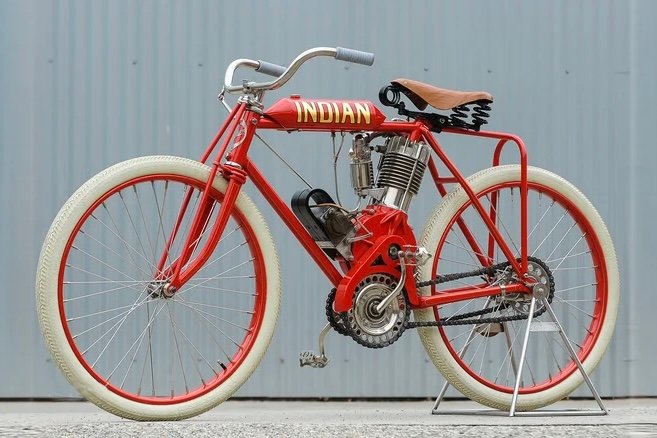
Op 1 juni 1901 werd de Hendee Manufacturing Company officieel opgericht, later hernoemd tot Indian Motocycle Company (bewust gespeld zonder ‘r’). Hun eerste productiemodel rolde in 1902 van de band – de Indian Single, een eenvoudige maar revolutionaire machine met:
- Een 1,75 pk single-cylinder motor
- Directe riem-aandrijving
- Pedalen voor het starten (en als backup)
- Een topsnelheid van ongeveer 40 km/h
- Een verkoopprijs van $200 (ongeveer $6.000 in huidige dollars)
Vroege Innovaties en Successen
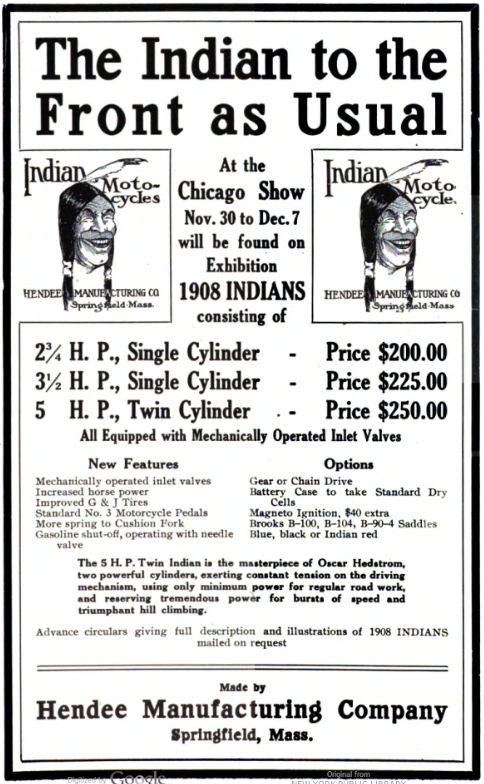
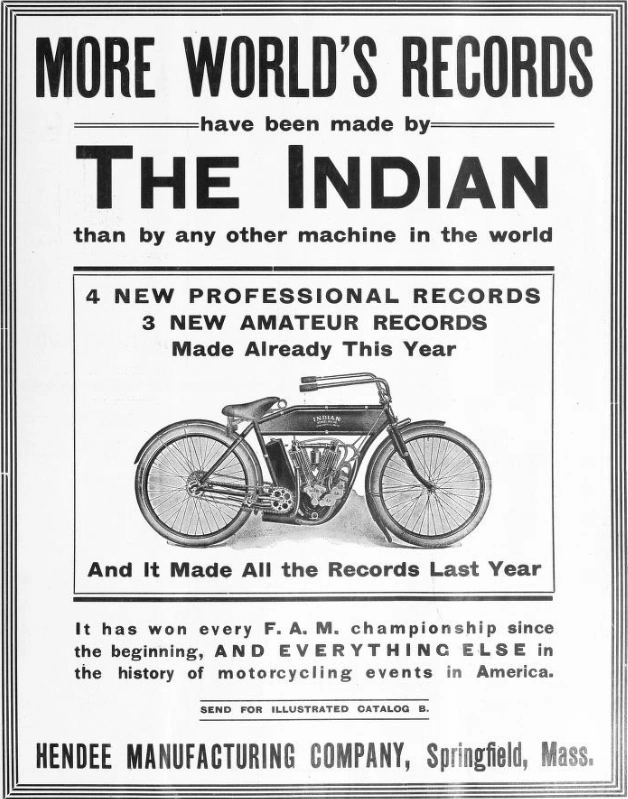
Indian vestigde al vroeg zijn reputatie als innovator:
1903: Introductie van de eerste V-twin motor in Amerika, een 2,25 pk machine die de basis zou vormen voor alle toekomstige Indian-motoren.
1904: Ontwikkeling van het eerste mechanische inlaatventiel systeem, een belangrijke verbetering ten opzichte van de atmosferische inlaatkleppen van concurrenten.
1905: Lancering van de Indian Twin met verbeterde betrouwbaarheid en prestaties.
1906: Indian produceert al 500 motorfietsen per jaar en begint te exporteren naar Europa.
1907: Introductie van de eerste echt praktische elektrische verlichting op een motorfiets.
1908: De productie stijgt naar 1.000 motorfietsen per jaar.
Hoofdstuk 2: De Gouden Jaren (1910-1920)
Technologische Doorbraken
De jaren 1910-1920 markeerden Indians gouden tijdperk van innovatie en marktdominantie:
1913: De Revolutionary Cradle Spring Frame Indian introduceerde het revolutionaire “cradle spring frame” systeem, dat de motor in een flexibel frame hing voor betere schokdemping. Dit maakte Indian-motoren aanzienlijk comfortabeler dan de concurrentie.
1914: De Eerste Elektrische Starter Jaren voordat auto’s dit zouden adopteren, bracht Indian de eerste motorfiets met elektrische starter op de markt – de Indian Twin met Hendee starter.
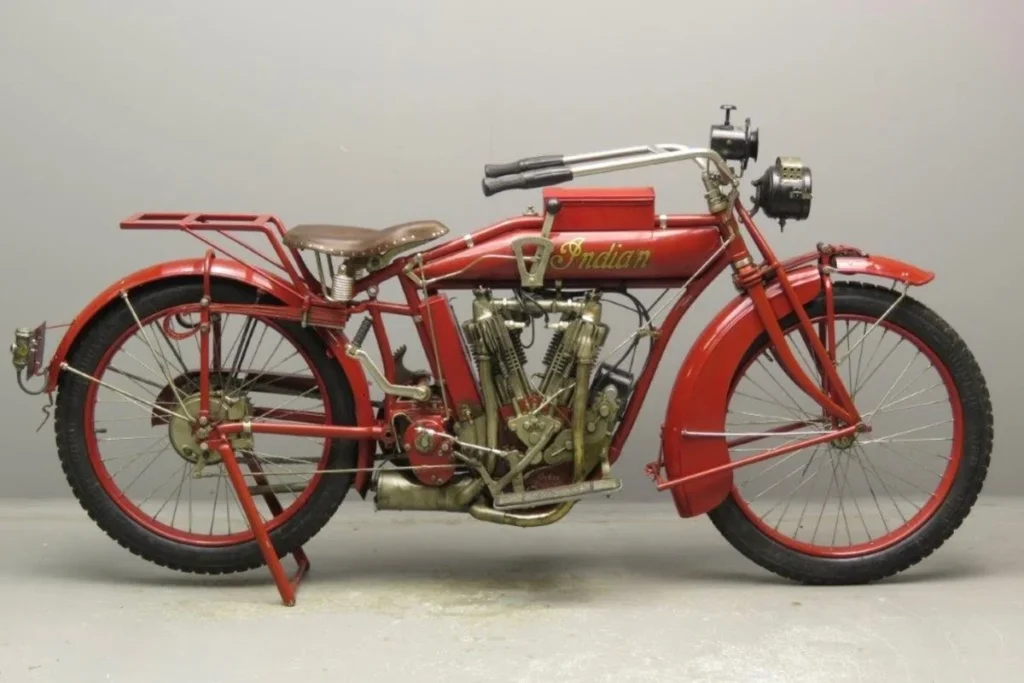
1915: De Beroemde Powerplus De introductie van de 61 cubic inch (1000cc) Powerplus V-twin motor markeerde een mijlpaal. Deze motor leverde 18 pk en kon de zware Indian sidecars moeiteloos voortstuwen.
Racing Successen en Wereldrecords
Indian domineerde de vroege motorsport:
1907: Indian wint de eerste officiële motorrace op het vliegveld van Brooklands in Engeland.
1911: Indian racers nemen de eerste drie plaatsen in de Isle of Man TT, wat internationale erkenning brengt.
1912: Lee Humiston vestigt een snelheidsrecord van 118 mph op een gemodificeerde Indian.
1913: Een Indian-bestuurder wint de prestigieuze Dodge City 300-mile race.
Eerste Wereldoorlog: Militaire Contracten
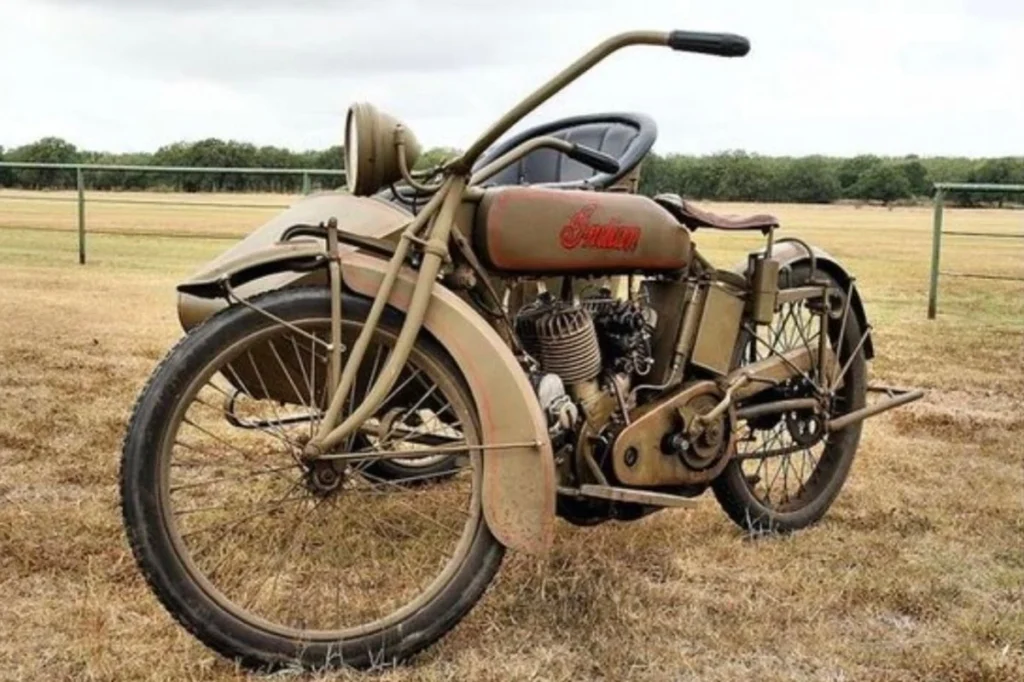
Tijdens de Eerste Wereldoorlog leverde Indian meer dan 41.000 motorfietsen aan het Amerikaanse leger en geallieerde troepen. De robuuste Indian Powerplus werd de standaard militaire motorfiets, gebruikt voor verkenning, communicatie en transport.
Deze militaire contracten maakten Indian tijdelijk de grootste motorfietsfabrikant ter wereld, maar zouden ook de basis leggen voor toekomstige financiële problemen toen de oorlogsbestellingen stopten.
Hoofdstuk 3: Iconische Modellen van het Gouden Tijdperk
Indian Single (1901-1919)
De machine die alles begon. Verkocht in verschillende configuraties:
- Standard: Basis transportmodel
- Racer: Lichtgewicht racing versie
- Delivery: Vrachtversie met grotere bagagedrager
Indian Twin en Powerplus (1907-1924)
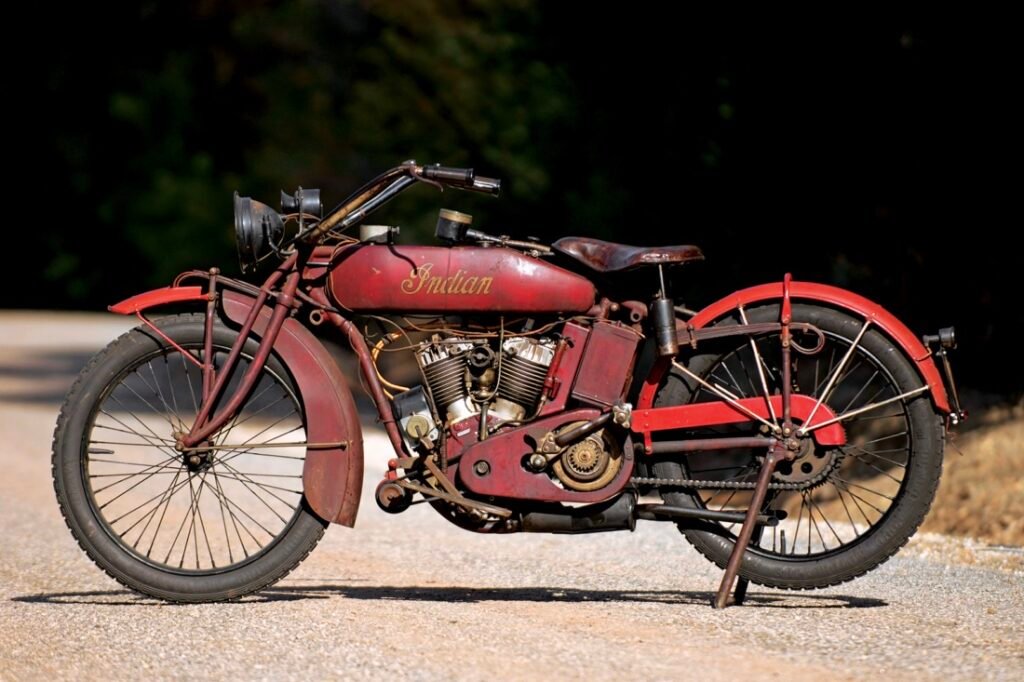
De V-twin die Indians reputatie vestigde:
- 1907-1915: Vroege twin met atmosferische inlaatkleppen
- 1916-1924: Powerplus met mechanische kleppen
- Bijzondere kenmerken: Leaf spring voorvork, drie-speed transmissie optie, elektrische verlichting
Indian Four (1927-1942)
Hoewel technisch na het gouden tijdperk gelanceerd, werd de Four ontwikkeld in de late jaren 1910:
- Oorsprong: Gebaseerd op de overgenomen ACE Motorcycle Company ontwerpen
- Motor: 1265cc inline-four
- Prestaties: Soepele werking, hoge snelheid capaciteiten
- Probleem: Oververhitting door de inline configuratie
Hoofdstuk 4: De Donkere Jaren (1920-1950)
Economische Uitdagingen
Na de Eerste Wereldoorlog kampte Indian met verschillende problemen:
1920-1929: De Roaring Twenties Crisis
- Wegvallende militaire contracten
- Toegenomen concurrentie van Harley-Davidson
- Economische recessie begin jaren 1920
- Management beslissingen die de racing programma’s beëindigden
1930-1940: De Great Depression De Grote Depressie trof Indian bijzonder hard:
- 1930: Productie daalt tot minder dan 5.000 eenheden per jaar
- 1933: Het bedrijf gaat bijna failliet
- 1934: Overname door E. Paul DuPont, die het merk probeert te redden
DuPont Era Vernieuwingen
Onder DuPont-eigenaarschap introduceerde Indian enkele opmerkelijke modellen:
Indian Sport Scout (1934-1942)
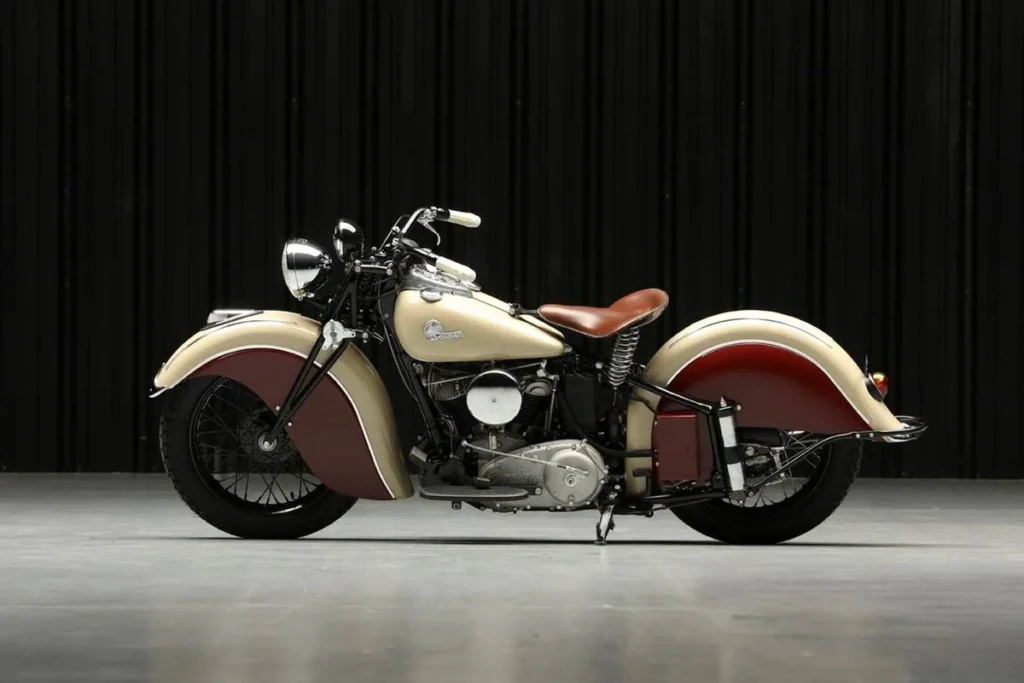
- 45 cubic inch (750cc) V-twin
- Verbeterde handling en betrouwbaarheid
- Populair bij racers en civiele gebruikers
Indian Chief (1922-1953)
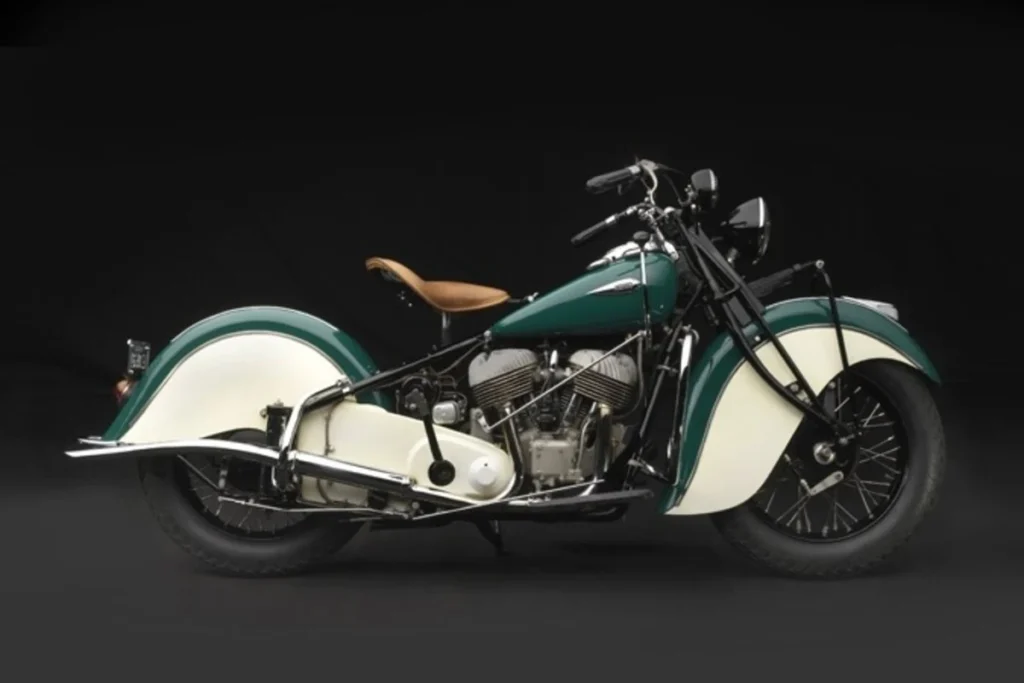
- 61 en later 74 cubic inch motoren
- Kenmerkende gevederde voorspatborden
- Werd het meest iconische Indian model
Indian Four (1927-1942)
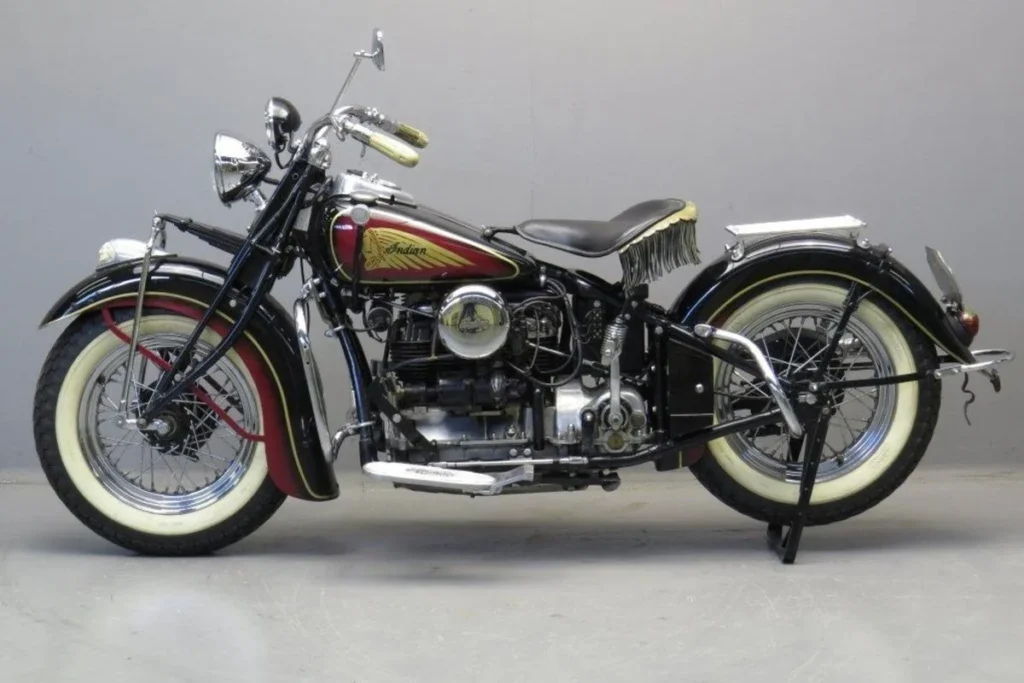
- Laatste grote innovatie van het klassieke Indian
- Gebaseerd op ACE ontwerp
- Technisch indrukwekkend maar commercieel problematisch
Tweede Wereldoorlog: Laatste Kans
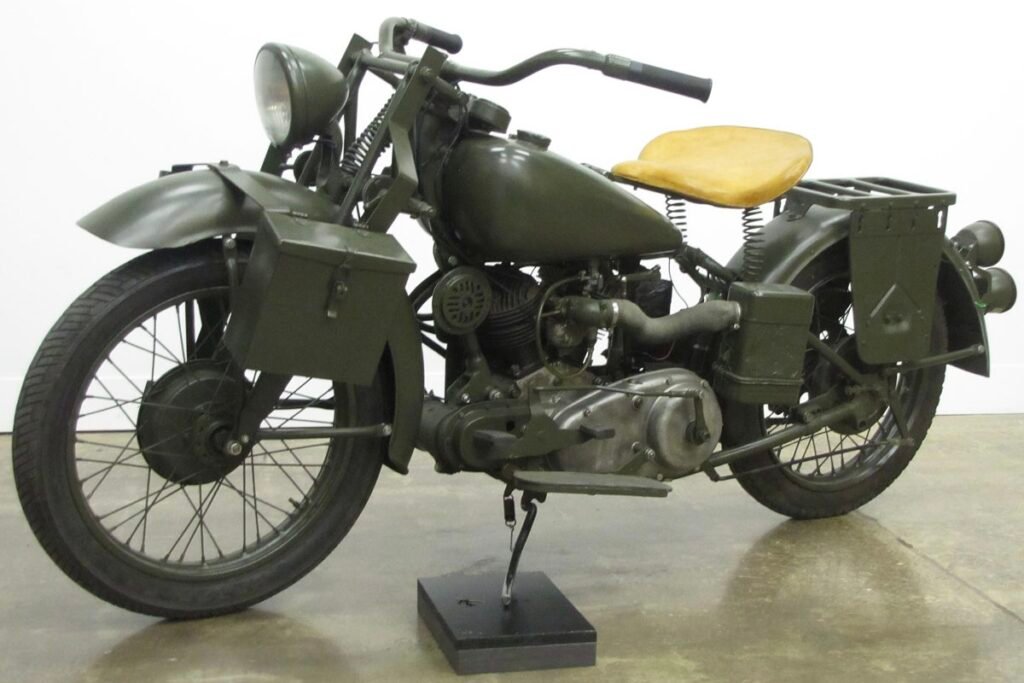
Tijdens WOII kreeg Indian opnieuw militaire contracten:
- Indian 741: Militaire versie van de Scout
- Indian 841: Experimentele shaft-drive motor voor woestijngebruik
- Contracten voor meer dan 35.000 militaire motorfietsen
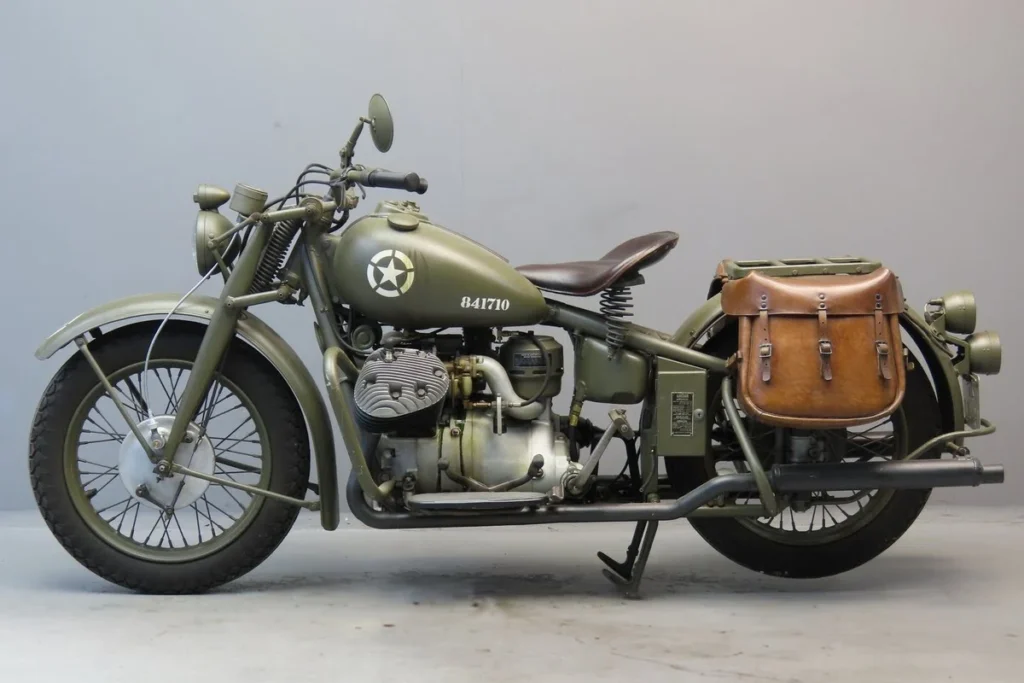
Echter, in tegenstelling tot Harley-Davidson, slaagde Indian er niet in om deze militaire ervaring om te zetten in naoorlogse commerciële successen.
Hoofdstuk 5: Het Einde van een Era (1950-1953)
De Laatste Jaren in Springfield
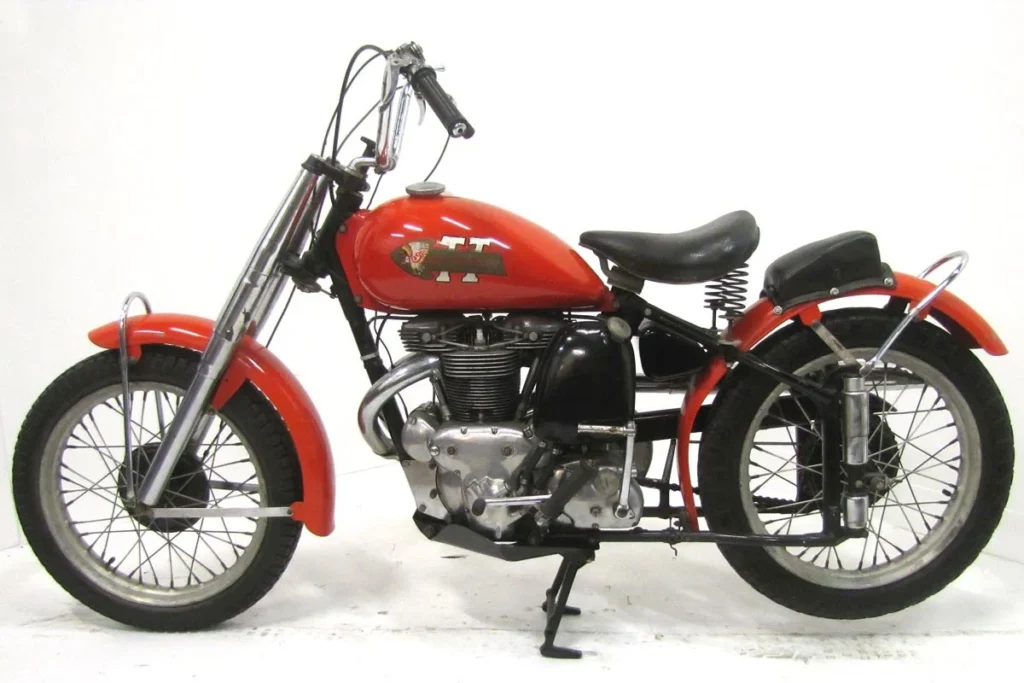
1949: Indian wordt verkocht aan industrialist Ralph Rogers 1950: Laatste belangrijke model introductie – de Indian Warrior 1951: Productie-problemen en kwaliteitsissues nemen toe 1952: Steeds meer financiële moeilijkheden 1953: De laatste Indian rolt van de band in Springfield op 13 augustus
Factoren in het Faillissement
Meerdere factoren droegen bij aan Indians ondergang:
- Management instabiliteit: Frequente eigenaarswisselingen
- Technische achterstand: Falen om te innoveren na WOII
- Productiekwaliteit: Inconsistente kwaliteitscontrole
- Marketing: Onvoldoende investering in merkpromotie
- Dealer netwerk: Zwak distributienetwerk vergeleken met Harley-Davidson
Hoofdstuk 6: De Wildernis Jaren (1953-1998)
Vele Pogingen tot Wederopleving
Na het faillissement van de originele Indian Motocycle Company volgden tientallen jaren van mislukte pogingen om het merk nieuw leven in te blazen:
1955-1960: Indian Sales Corporation
- Importeerde en herbenoemde Royal Enfield motoren
- Gebruikte Indian badges op Britse machines
- Commercieel onsuccesvol
1962-1970: Verschillende Kleine Pogingen
- Mini-bike producenten gebruikten Indian naam
- Kleine 50cc machines met Indian branding
- Geen van deze pogingen slaagde erin het erfgoed eer aan te doen
1970s-1980s: Legal Battles
- Talloze rechtszaken over het gebruik van de Indian naam
- Verschillende claimants beweerden eigenaar te zijn van het merk
- Verwarring in de markt over “echte” Indian motorfietsen
1990s: Italian Connection
- Verschillende Italiaanse bedrijven probeerden Indian nieuw leven in te blazen
- Kleine productiereeksen met gemengde resultaten
- Kwaliteit en authenticiteit bleven problematisch
Hoofdstuk 7: De Moderne Wedergeboorte (1998-2011)
Gilroy Years: Een Nieuwe Start
1998: De California-based Indian Motorcycle Company wordt opgericht in Gilroy
- Geleid door een consortium van investeerders
- Ambitieuze plannen voor moderne interpretaties van klassieke ontwerpen
1999-2003: Eerste Moderne Modellen
- Indian Chief: Moderne versie van het klassieke ontwerp
- Indian Scout: Nieuw geïnterpreteerde middleware motor
- Indian Spirit: Meer moderne styling met traditionele elementen
Technische Specificaties Gilroy Era
- Motoren: S&S geleverde V-twin motoren (100-111 cubic inch)
- Frames: Moderne stalen frames met klassieke lijnen
- Styling: Bewust nostalgisch met moderne betrouwbaarheid
- Productie: Handgebouwd karakter met beperkte volumes
Uitdagingen van de Gilroy Era
Ondanks enthousiasme kampte de Gilroy operatie met problemen:
- Hoge prijzen: $25.000-$35.000 per motorfiets
- Beperkte productie: Slechts enkele duizenden per jaar
- Kwaliteitsproblemen: Inconsistente afwerking en betrouwbaarheid
- Dealer netwerk: Beperkte distributie en service
2003: Het Gilroy bedrijf gaat failliet na het produceren van ongeveer 9.000 motorfietsen
Hoofdstuk 8: Polaris Era – De Definitieve Wedergeboorte (2011-heden)
De Overname door Polaris
April 2011: Polaris Industries koopt de Indian Motorcycle merknaam voor $15 miljoen
- Polaris brengt aanzienlijke ervaring in off-road voertuigen en sneeuwscooters
- Toezegging van $100 miljoen investering in onderzoek en ontwikkeling
- Belofte om Indian terug te brengen als premium Amerikaanse motorfietsmerk
Ontwikkelingsstrategie
Polaris adopteerde een methodische aanpak:
2011-2013: Research en Ontwikkeling
- Uitgebreide marktonderzoek
- Ontwikkeling van geheel nieuwe motoren en frames
- Opbouw van modern productiefaciliteit in Spirit Lake, Iowa
2013: De Lancering
- Onthulling van de nieuwe Indian Chief op Sturgis Motorcycle Rally
- Volledig nieuwe Thunder Stroke 111 motor (1811cc)
- Moderne technologie in klassiek ontwerp
Moderne Indian Modellen (2013-heden)
Indian Chief Familie (2014-heden)
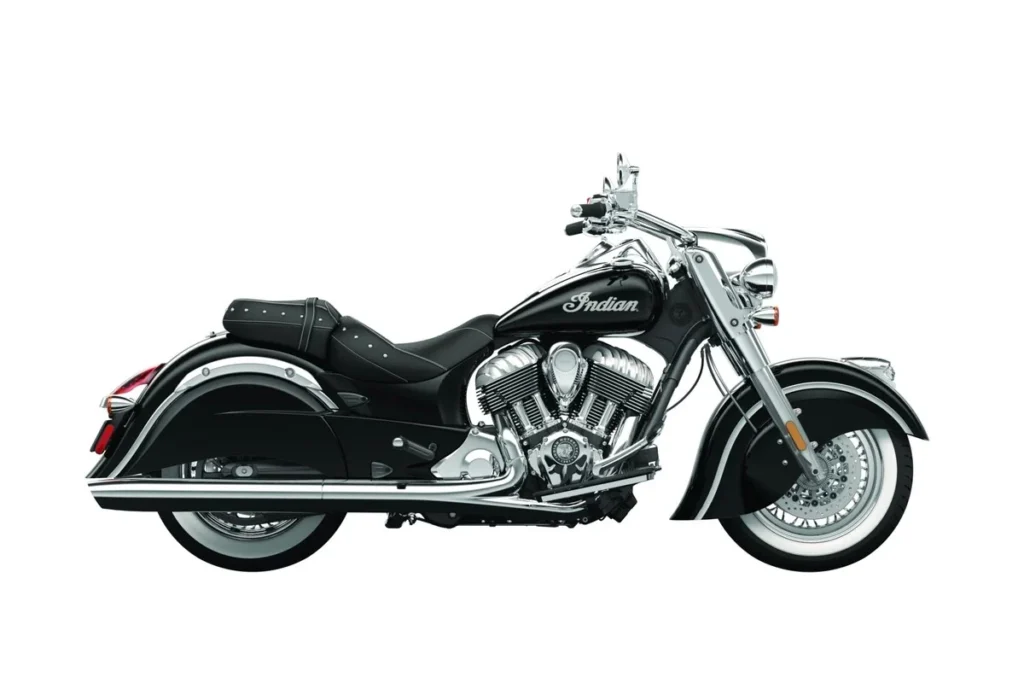
- Chief Classic: Traditionele touring configuratie
- Chief Vintage: Premium tourer met hard bags en windshield
- Chief Dark Horse: Blacked-out aggressive styling
- Chief Bobber: Minimalist bobber styling
- Specificaties: Thunder Stroke 111 (later 116), 6-speed transmissie, moderne elektronica
Indian Scout Familie (2015-heden)
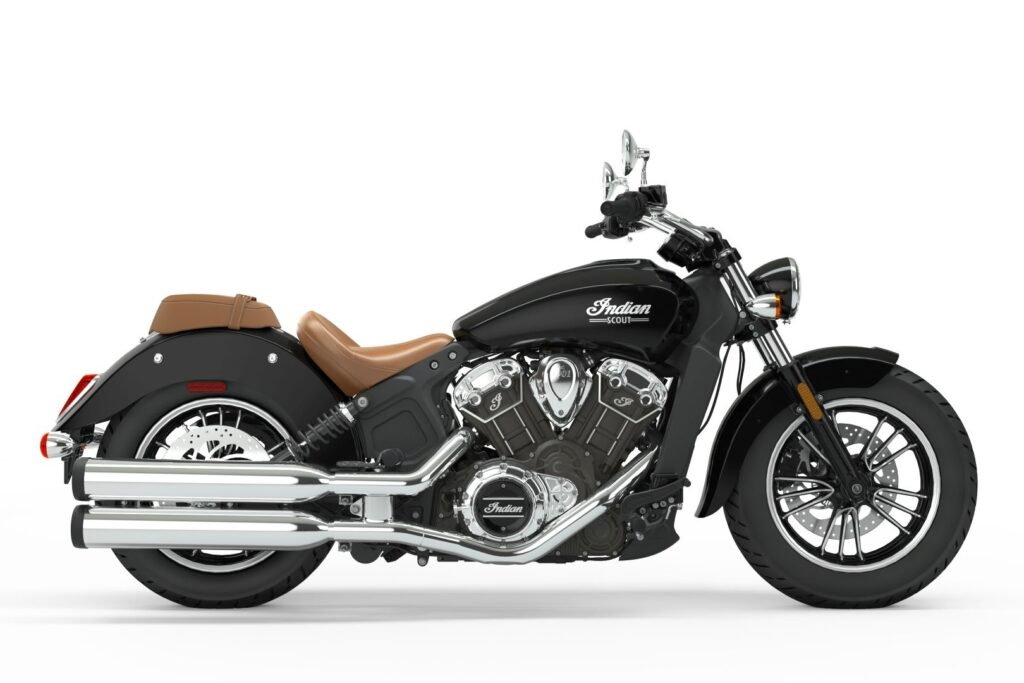
- Scout: Mid-size cruiser, toegankelijk instapmodel
- Scout Sixty: 60 cubic inch (999cc) versie voor nieuwe rijders
- Scout Bobber: Sportieve bobber versie
- Scout Rogue: Donkere, aggressive styling
- Motor: Liquid-cooled V-twin, 69 of 100 pk
Indian Challenger (2020-heden)
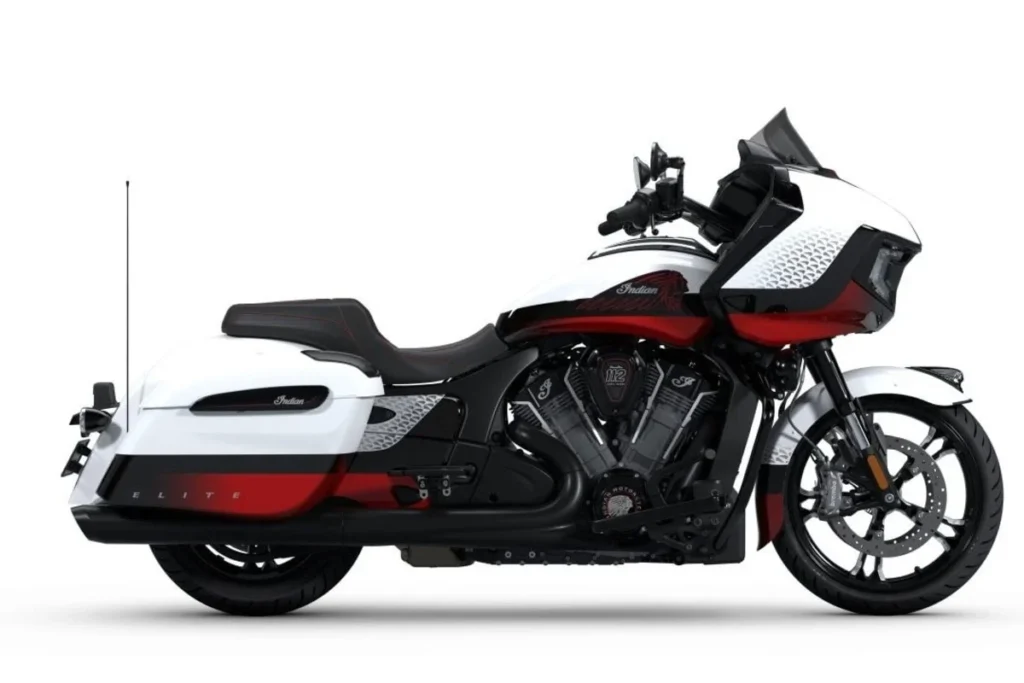
- Challenger: Touring bagger met fairing en hard bags
- Challenger Dark Horse: Sportieve all-black versie
- PowerPlus Motor: Nieuwe liquid-cooled 108 cubic inch V-twin
- Technologie: Ride Command infotainment systeem
Indian FTR Familie (2019-heden)
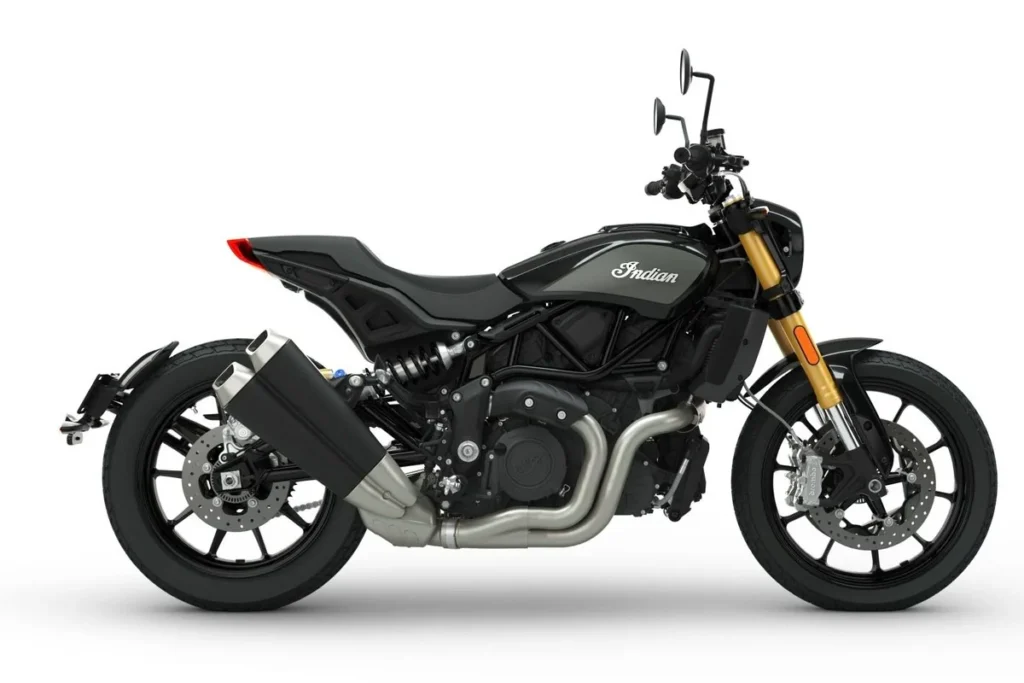
- FTR 1200: Flat track-geïnspireerde street tracker
- FTR 1200 S: Premium versie met advanced suspension
- Motor: Scout-afgeleide liquid-cooled V-twin
- Styling: Modern, hoekig ontwerp inspiratie van racers
Racing Terugkeer
Indian Motorcycle Racing
- American Flat Track: Dominantie in professional flat track racing
- King of the Baggers: Success met Challenger op wegrace circuits
- Pike’s Peak: Record-setting runs met modified Indians
- Dirt Track: Support voor amateur en professional racers
Hoofdstuk 9: Indian in Populaire Cultuur en Films
Hollywood en het Zilveren Scherm
Indian Motorcycles hebben een rijke geschiedenis in films en televisie:
Vroege Films (1920s-1940s)
- “The Wild One” (1953): Hoewel Marlon Brando een Triumph reed, waren Indians zichtbaar in de achtergrond
- Serial Westerns: Indians werden vaak gebruikt in Western serials vanwege hun robuuste reputatie
Klassieke Era Films (1950s-1970s)
- “Easy Rider” (1969): Dennis Hopper reed een gechopper Indian Scout in sommige scènes
- “Electra Glide in Blue” (1973): Politie-drama met prominente motorfiets scènes
Moderne Films (1980s-heden)
- “Indiana Jones and the Last Crusade” (1989): Sean Connery’s karakter rijdt op een klassieke Indian
- “The World’s Fastest Indian” (2005): Anthony Hopkins speelt Burt Munro en zijn record-zettende Indian Scout
- “Ghost Rider” (2007): Nicolas Cage’s karakter transformeert een Indian Chief
- “The Curious Case of Benjamin Button” (2008): Period-accurate Indians gebruikt in flashback scènes
Televisie Aanwezigheid
- “Sons of Anarchy”: Verschillende Indian modellen gebruikt door karakters
- “American Pickers”: Frequente zoektochten naar vintage Indian motorfietsen
- “Counting Cars”: Restoration en customization van klassieke Indians
Muziek en Culturele Referenties
- Country Music: Talloze country songs refereren naar Indian motorcycles
- Rock Music: Heavy metal en rock bands gebruiken Indian imagery
- Tattoo Culture: Indian logos en imagery populair in tattoo kunst
Hoofdstuk 10: Technologische Evolutie en Innovaties
Historische Technologische Mijlpalen
1901-1910: Foundation Era Innovaties
- 1903: Eerste producte V-twin motor in Amerika
- 1904: Mechanische inlaatklep systeem
- 1907: Eerste praktische elektrische verlichting
- 1909: Twee-speed transmissie introductie
1910-1920: Engineering Excellentie
- 1913: Cradle spring frame voor verbeterde comfort
- 1914: Elektrische starter – jaren voor auto’s
- 1915: Powerplus motor met verbeterde betrouwbaarheid
- 1919: Eerste drie-speed transmissie op productie motorfiets
1920-1950: Mature Development
- 1928: Front brake standard uitrusting
- 1940: Girder fork verbetering
- 1941: Plunger rear suspension op Chief modellen
- 1942: Shaft drive experimentation op 841 model
Moderne Era Technologie (2011-heden)
Thunder Stroke Motor Familie
- Thunder Stroke 111: Air-cooled, 111 cubic inch (1811cc) V-twin
- Specificaties: 119 lb-ft torque, closed-loop fuel injection, 6-speed transmission
- Features: Counterbalanced voor smoothness, automotive-grade electronics
PowerPlus Motor (2020)
- Displacement: 108 cubic inch (1769cc) liquid-cooled V-twin
- Power: 122 hp, 128 lb-ft torque
- Technology: Variable cam timing, ride-by-wire throttle
- Cooling: Liquid cooling voor consistente prestaties
Scout Motor Familie
- Scout 69: 69 cubic inch (1133cc) liquid-cooled V-twin
- Scout 60: 60 cubic inch (999cc) versie
- Features: DOHC, closed-loop fuel injection, wet sump lubrication
Elektronische Systemen
Ride Command System
- 7-inch touchscreen: GPS navigation, Bluetooth connectivity
- Vehicle info: Real-time diagnostics, maintenance reminders
- Integration: Smartphone connectivity, music streaming
- Weather: Real-time weather information
Advanced Safety Features
- ABS: Anti-lock braking standard op premium modellen
- Traction control: Electronic intervention voor grip
- Stability control: Advanced lean-angle sensitive systems
- LED lighting: Modern LED headlights en turn signals
Hoofdstuk 11: Indian vs. Harley-Davidson – De Eeuwige Rivaliteit
Historische Competitie (1903-1953)
Vroege Jaren (1903-1920)
- Indian had technologische voorsprong met elektrische starter en advanced suspension
- Harley focuste op betrouwbaarheid en simpliciteit
- Indian domineerde racing, Harley bouwde sterker dealer netwerk
Racing Wars
- 1910s: Indian dominantie in Isle of Man TT en American racing
- 1920s: Harley-Davidson begint racing successen te boeken
- 1930s: Beide merken campaignen agressief in dirt track racing
Market Share Battles
- 1913: Indian is ’s werelds grootste motorfietsfabrikant
- 1920: Harley begint marktaandeel te winnen
- 1930: Harley wordt dominante Amerikaanse merk
- 1953: Indian exit, Harley monopoliseert Amerikaanse markt
Moderne Rivaliteit (2013-heden)
Product Positioning
- Indian: Premium luxury positioning, heritage-focused marketing
- Harley: Broader market appeal, lifestyle branding
- Pricing: Indian generally premium-priced versus comparable Harleys
Design Philosophy
- Indian: Klassieke Amerikaanse touring en cruising focus
- Harley: Bredere range van custom, sport, en touring opties
- Styling: Indian emphasizes flowing, organic designs; Harley more angular
Market Performance
- 2013-2023: Indian groeit van 0% naar ~8% Amerikaanse marktaandeel
- Premium segment: Indian concurreert effectief in high-end touring markt
- International: Beide merken vechten om internationale expansie
Cultural Differences
Brand Identity
- Indian: “America’s First Motorcycle Company” – heritage en pionier status
- Harley: “Motor Company” – rebellion en freedom messaging
Customer Base
- Indian: Tends to attract older, affluent buyers seeking exclusivity
- Harley: Broader demographic, stronger youth and international appeal
Hoofdstuk 12: Collectible Market en Vintage Indian Waarden
Pre-War Indians (1901-1942)
Most Valuable Models:
1904 Indian Single
- Waarde: $75,000-$150,000 voor restored examples
- Rarity: Extremely rare, less than 10 known complete examples
- Significance: One of earliest production Indians
1913-1915 Indian Boardtrack Racers
- Waarde: $100,000-$300,000
- Features: Stripped-down racing configuration, no brakes
- Provenance: Racing history dramatically affects value
1920 Indian Scout
- Waarde: $15,000-$45,000 depending on condition
- Appeal: Perfect balance of rarity and ridability
- Restoration: Complete restorations command premium prices
Indian Four (1927-1942)
- Early Years (1927-1932): $25,000-$75,000
- Late Years (1933-1942): $20,000-$50,000
- Condition: Running examples command significant premium
Post-War Indians (1946-1953)
Indian Chief (1947-1953)
- Waarde: $8,000-$35,000
- Variations: Roadmaster commands highest prices
- Condition: Original paint and chrome dramatically affect value
Indian Warrior/Arrow (1949-1952)
- Waarde: $3,000-$15,000
- Significance: Last of Springfield production
- Collectibility: Growing interest among collectors
Gilroy Era Indians (1999-2003)
Collectible Status: Emerging collector interest
- Current Values: $8,000-$25,000
- Future Outlook: Limited production numbers suggest potential appreciation
- Condition: Low-mileage examples most desirable
Factors Affecting Value
Provenance and Documentation
- Factory records and original documentation add 20-30% value
- Famous previous ownership can double values
- Racing history extremely valuable for appropriate models
Originality vs. Restoration
- Unrestored original paint often more valuable than restorations
- Period-correct modifications generally acceptable
- Professional restorations preferred over amateur work
Rarity Factors
- Special editions and limited production runs
- Unusual configurations or options
- Early or late production years for specific models
Hoofdstuk 13: Indian Motorcycle Clubs en Community
Historic Indian Clubs
Antique Motorcycle Club of America (AMCA)
- Founded: 1954
- Focus: Preservation en restoration van vintage American motorcycles
- Indian Presence: Strong Indian representation among members
- Events: National meets featuring Indian-only classes
Indian Motorcycle Club of America (IMCA)
- Founded: 1950
- Mission: Preserving Indian motorcycle heritage
- Activities: Technical support, parts sourcing, historical research
- Publications: Quarterly magazine with restoration guides
Modern Indian Owner Groups
Indian Motorcycle Riders Group (IMRG)
- Official: Polaris-sponsored official owner group
- Membership: Open to all Indian owners
- Benefits: Riding events, technical support, merchandise discounts
- Chapters: Local chapters worldwide
Regional Clubs
- Northeast Indian Riders: New England focused group
- Southwest Indian Club: Desert riding specialists
- European Indian Clubs: Growing international presence
- Asian Indian Groups: Emerging markets showing strong enthusiasm
Online Communities
Indian Motorcycle Forum
- Active Members: Over 50,000 registered users
- Content: Technical discussions, modification guides, ride reports
- Marketplace: Active buy/sell section for parts and bikes
Social Media Presence
- Facebook Groups: Hundreds of Indian-specific groups by model and region
- Instagram: Strong visual culture around Indian customization
- YouTube: Technical channels and ride documentation
Events en Rallies
Indian Motorcycle Homecoming
- Location: Sturgis, South Dakota annually
- Activities: Group rides, new model unveilings, vintage displays
- Attendance: 5,000+ Indian owners annually
Regional Rallies
- East Coast Rally: Annual gathering in North Carolina
- West Coast Meet: California-based annual event
- Midwest Gathering: Central location rotating rally
Hoofdstuk 14: Customization en Aftermarket
Historic Customization Culture
Early Modifications (1920s-1950s)
- Bobbing: Removing excess bodywork for lighter weight
- Engine Modifications: Bore and stroke kits for more power
- Custom Paint: Hand-painted flames and pinstripes popular
- Racing Prep: Modifications for dirt track and hillclimb racing
Modern Custom Culture
Popular Modification Categories
Performance Upgrades
- Engine Tuning: ECU remapping, high-flow intake systems
- Exhaust Systems: Aftermarket exhausts for sound and performance
- Suspension: Upgraded shocks and fork internals
- Braking: Performance brake pads and stainless lines
Aesthetic Modifications
- Custom Paint: Modern techniques allow incredible detail
- Chrome and Powder Coating: Enhanced finish options
- LED Lighting: Modern lighting upgrades
- Seats: Custom upholstery and ergonomic improvements
Major Aftermarket Companies
Performance Specialists
- S&S Cycle: Engine components and complete motor builds
- Indian Motorcycle Accessories: Factory-backed performance parts
- Thunderstroke Plus: Specialized Indian performance company
- Lloyd’z Motor Werkz: Custom Indian specialists
Styling Companies
- Roland Sands Design: High-end custom aesthetic parts
- Kuryakyn: Chrome and lighting accessories
- Indian Motorcycle Genuine Accessories: Factory styling options
- Ciro 3D: LED lighting specialists
Custom Build Culture
Prominent Custom Builders
- Rich Lambrechts: Award-winning Indian customs
- Paul Yaffe: Radical Indian modifications
- Roland Sands: Clean, modern interpretations
- Donnie Smith: Traditional custom approaches
Custom Show Circuit
- AMD World Championship: International custom competition
- Sturgis Custom Shows: Annual showcase during rally
- Daytona Bike Week: East coast custom displays
- European Custom Shows: Growing international custom scene
Hoofdstuk 15: Racing Heritage en Motorsports
Historical Racing Dominance (1907-1953)
Early Racing Success
- 1907: First official motorcycle race win at Brooklands
- 1911: Isle of Man TT sweep – 1st, 2nd, and 3rd place
- 1914: Cannonball Run record from San Diego to New York
- 1915: Dodge City 300 victory establishing endurance capabilities
Dirt Track Era (1920s-1940s)
- AMA Championship: Multiple national championship titles
- Local Track Dominance: Indians won majority of dirt track events
- Famous Riders: Ed Kretz Sr., Floyd Emde, Bill Tuman rode Indians to victory
- Technical Innovation: Racing drove development of improved suspension and engines
Modern Racing Return (2015-heden)
American Flat Track
- 2015: Indian returns to professional racing after 62-year absence
- FTR750: Purpose-built racing motorcycle for AFT competition
- Success: Multiple championship titles and race victories
- Technology Transfer: Racing developments influence street bike design
King of the Baggers
- 2020: Indian enters bagger racing with modified Challenger
- Competition: Direct rivalry with Harley-Davidson baggers
- Performance: Competitive lap times at major road courses
- Innovation: Racing drives touring bike performance development
Flat Track Racing Legacy
The Indian FTR750
- Engine: 750cc liquid-cooled V-twin race motor
- Development: Direct collaboration with racing teams
- Success Rate: High percentage of race wins since introduction
- Influence: Design elements inspired street FTR1200 model
Team Partnerships
- Indian Motorcycle/Progressive AFT Team: Factory-backed effort
- Privateer Support: Technical and financial support for independent racers
- Rider Development: Support for up-and-coming racing talent
- International Racing: Expansion into global flat track events
Motorsports Technology Development
Racing to Street Technology Transfer
- Suspension Development: Racing suspension technology adapted for street
- Engine Management: Racing ECU development benefits street bikes
- Aerodynamics: Wind tunnel testing for racing influences street design
- Materials Science: Lightweight racing materials adopted for production
Hoofdstuk 16: Global Expansion en International Markets
Historical International Presence
Early Export Success (1905-1940)
- Europe: Strong presence in UK, Germany, France
- British Empire: Popular in Australia, South Africa, India
- Military Export: Various nations used Indian military models
- Racing International: European racing success built brand awareness
Modern Global Strategy (2011-heden)
Market Entry Approach
- Phase 1: North American market establishment
- Phase 2: English-speaking markets (Australia, UK)
- Phase 3: European Union expansion
- Phase 4: Asian market development
Regional Market Penetration
Europe
- Launch: 2014 European market entry
- Dealers: 200+ dealers across EU by 2023
- Models: Full model range available, EU-spec modifications
- Success: Strong sales in Germany, UK, Netherlands
Asia-Pacific
- Australia: Strong market performance, local assembly considered
- Japan: Premium positioning in mature motorcycle market
- India: Ironic return to the country sharing the company name
- Thailand: Manufacturing hub consideration for regional distribution
Latin America
- Mexico: Growing market with local dealer network
- Brazil: Large motorcycle market, high import duties challenge
- Argentina: Emerging market with enthusiast following
Manufacturing and Production
Primary Manufacturing
- Spirit Lake, Iowa: Main production facility for global market
- Capacity: 50,000+ units annually
- Quality: ISO certification and modern manufacturing techniques
- Workforce: 500+ employees in manufacturing and engineering
Regional Assembly Considerations
- European Assembly: Investigated to reduce tariffs and shipping costs
- Asian Production: Potential for smaller displacement Scout assembly
- Regional Customization: